Mechanical Design · Product Development
Team project
Electric Scooter Steering Stability System
Mechanical Design · Adams · FEA · Product Development
A structured product development project focused on improving the steering stability of an urban electric scooter using a passive mechanical steering stabilizer.
Year
2025–2026
Type
Team project
Tools
SolidWorks · MSC Adams · ANSYS · QFD · DfX
My Role
Mechanical Design · Product Development · Engineering Analysis
01 / Overview
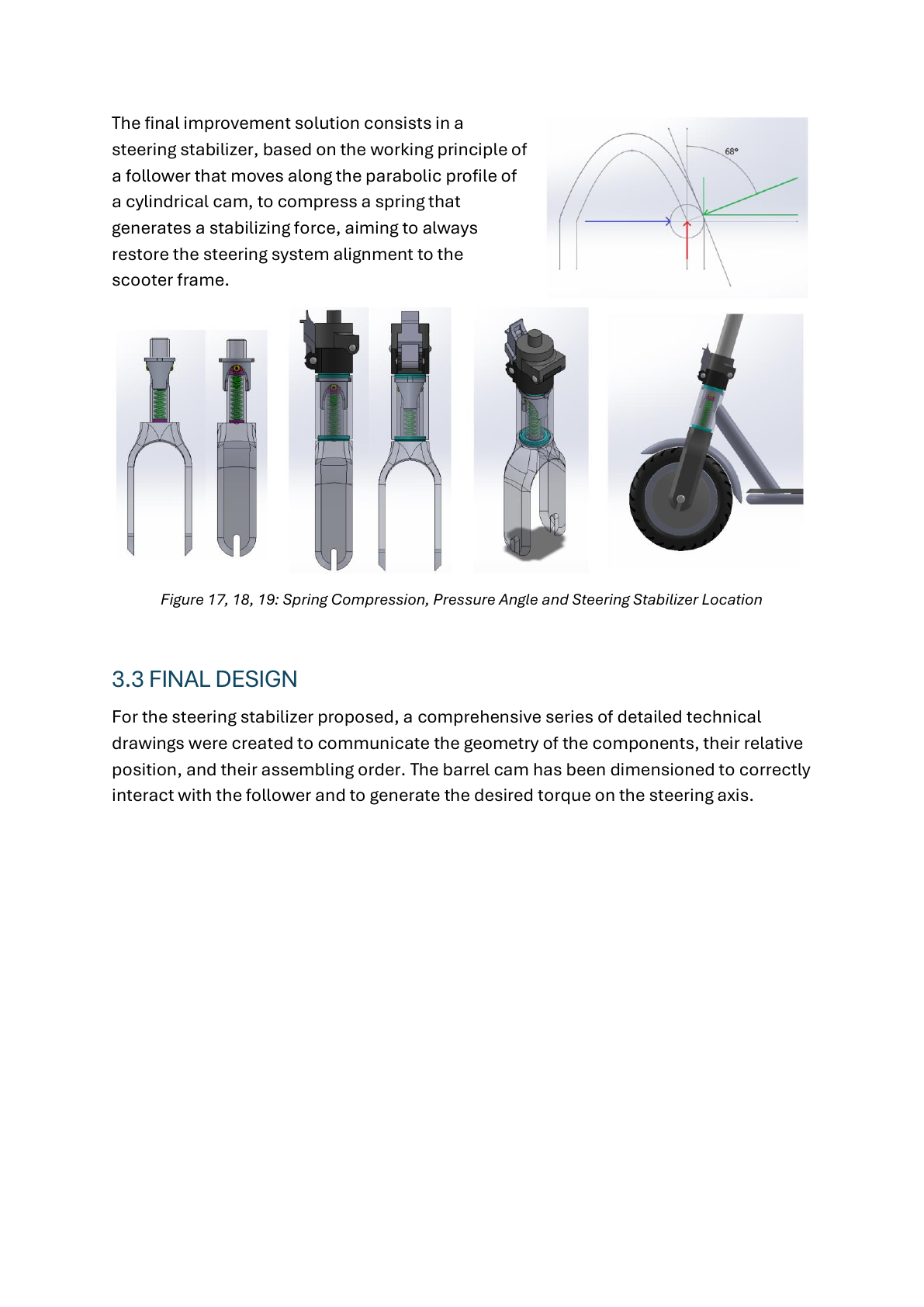
The Xiaomi Electric Scooter 4 was studied as an urban mobility system exposed to cobblestones, joints, potholes and other road inputs. The team developed a compact passive mechanism intended to reduce disturbance-induced steering oscillation while preserving the scooter's original architecture.
Problem / Challenge
Road disturbances are transmitted directly through the front wheel and steering column. Any added stabilizer had to improve perceived control without compromising folding, steering range, service access, mass, safety or regulatory constraints.
Objectives
- 01Translate user needs into measurable engineering requirements
- 02Select a robust passive concept through structured comparison
- 03Integrate the mechanism into the existing front-end architecture
- 04Validate motion, stresses, manufacturability, assembly and serviceability
02 / My Contribution
Team project · My contribution is identified below
As part of Team 09, I contributed to requirements definition and QFD, concept evaluation, development of the passive axial-spring stabilizer, CAD integration, interpretation of Adams and FEA results, and the DfM/DfA and manufacturing plan. The final design and validation were completed collaboratively.
03 / User Requirements · Design Decision
Customer scenarios and product requirements were converted into a requirement hierarchy. Product dissection, QFD and weighted decision criteria were then used to focus the improvement on stability and compare candidate strategies before embodiment work began.
04 / Steering Stabilizer Concept · Mechanical Design · CAD Integration
The selected architecture uses a cam-like follower profile to compress an axial spring as steering angle increases. The restoring action returns the steering system toward the central position. Configuration design resolved interfaces with the fork, steering tube, existing fasteners and available packaging envelope before CAD detailing.
05 / Kinematic Analysis · Finite Element Analysis
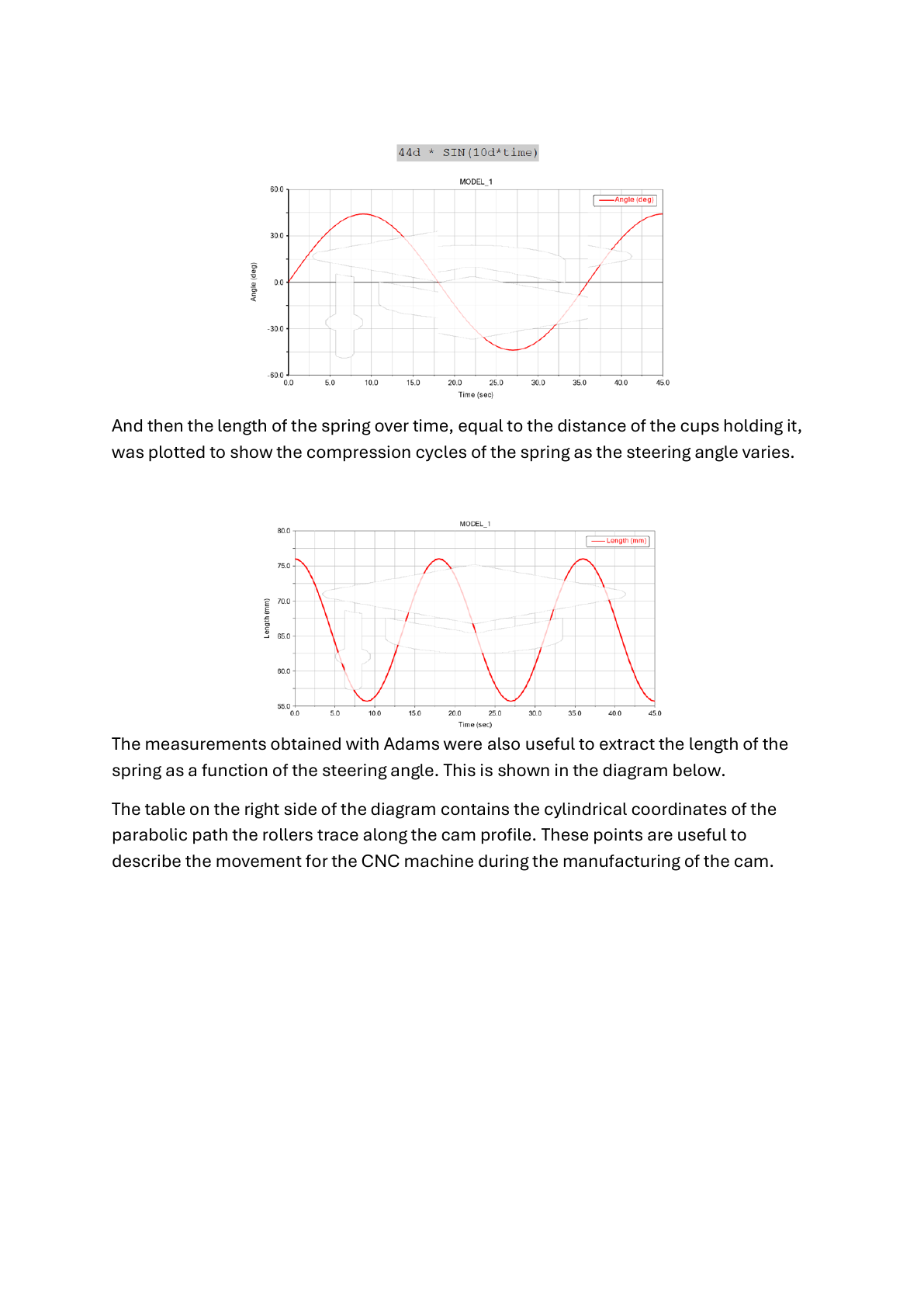
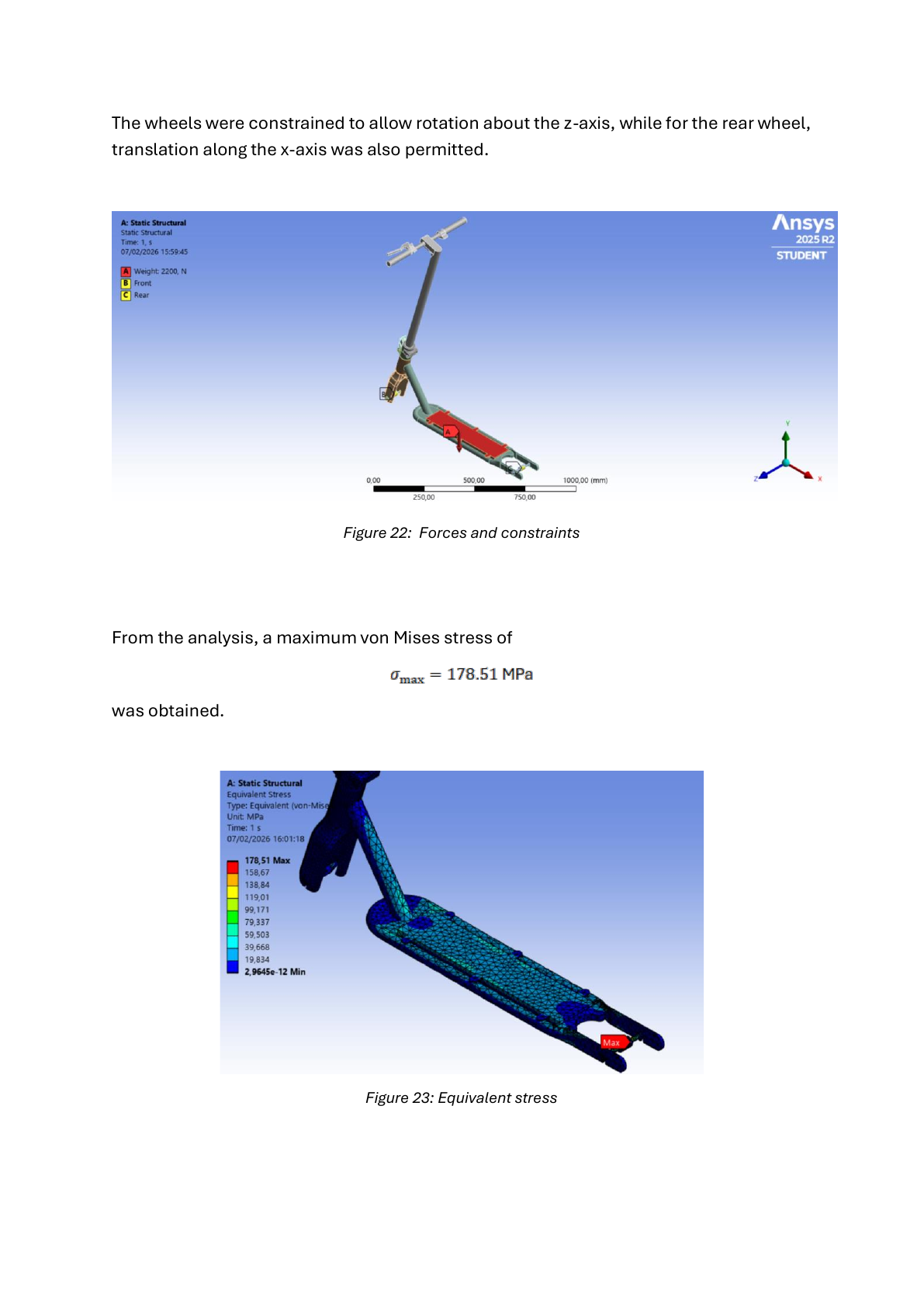
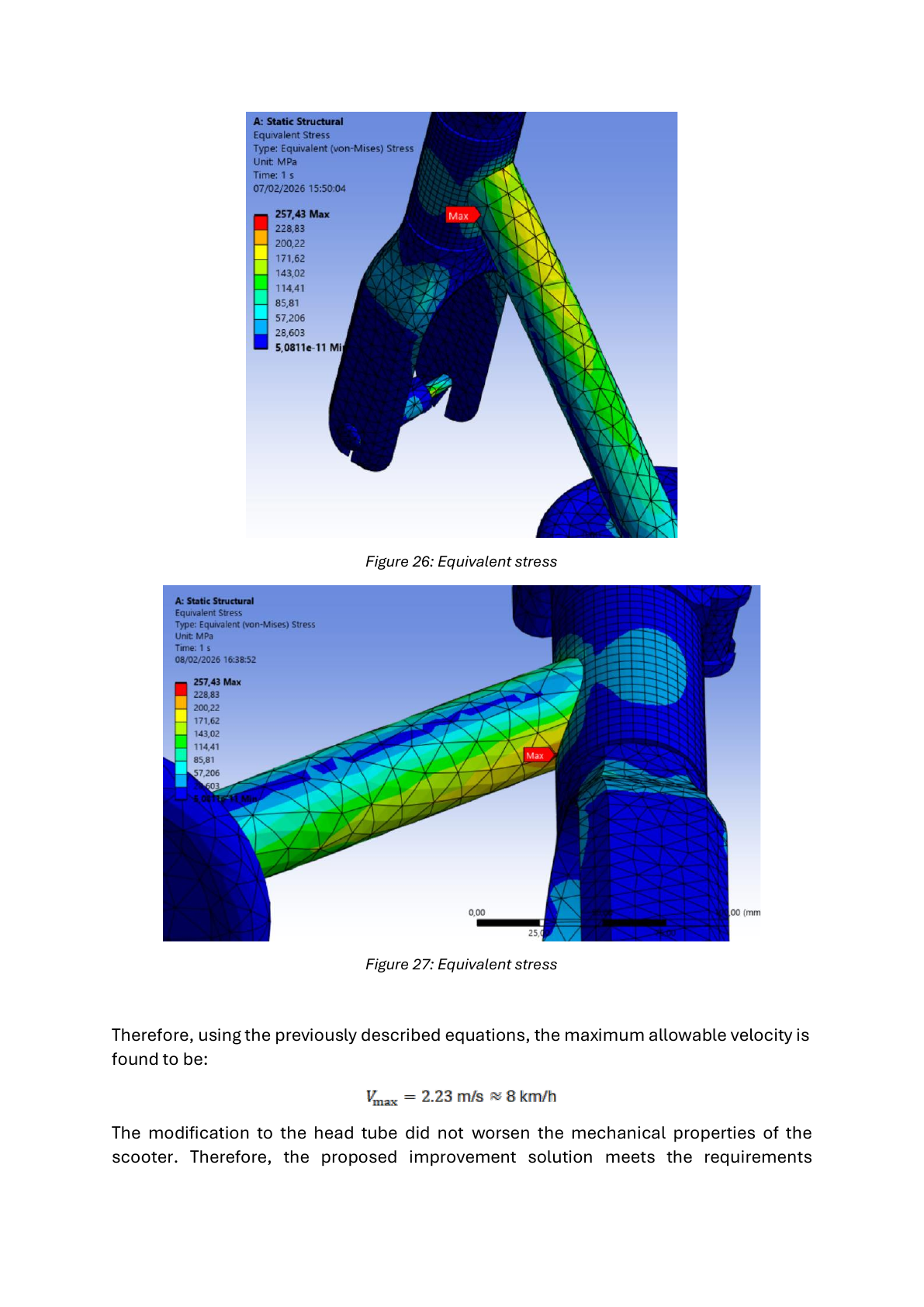
MSC Adams was used to examine steering-angle motion, spring compression and the kinematic relationship needed to define the cam path. ANSYS static structural studies then checked the modified assembly under representative load cases, including stress concentration at the steering and deck interfaces.
06 / DfX · Manufacturing Considerations · Final Result
The project produced an integrated passive steering-stabilizer concept, detailed geometry, a kinematic definition, structural checks and a preliminary manufacturing and assembly route. The selected aluminum components retained a reported safety factor above 1.5 in the evaluated static case.
07 / Key Learnings
Early requirement structure made later concept decisions more defensible. The project also reinforced that an apparently small steering component must be developed as a system: packaging, load transfer, user feel, safety, assembly and service access all influence the final geometry.
08 / Tools / Methods
09 / Full Project Report
Full Project Report
This project was developed as a team-based engineering design study, covering product requirements, concept selection, embodiment design, kinematic analysis, finite element validation, manufacturing considerations and system integration.
Next Project · 02